The Taming of the Tutu: A Call for Restraint in Today’s Ballet Stars

“Many of today’s ballet students believe that the main goal of their training is to achieve higher extensions, bigger jumps, and more turns. As they obsessively view ballet wunderkinds on YouTube, ballet companies respond to the demand for ballet pyrotechnics by promoting hyper-technical dancers without much coaching on the subtleties necessary to make great art.”

http://www.huffingtonpost.com/risa-gary-kaplowitz/the-taming-of-the-tutu-a-_b_1739994.html

Some Holiday Help

Scary Deviled Eggs
Scary Deviled Eggs

I’m really not one for tricks for dieting or sleight of hand however we recently had Halloween here in the US and I think there are some very good ideas in an article I read by Stephen S. Holden at the Washington Post, published in the Minneapolis Star Tribune on a recent Wednesday. In summary, the article talks about plate size and color as key to helping people eat less which is important since we have such an obesity issue in these parts. Ironically, anyone who has been to college in this country has also been poor enough to eat cereal out of coffee mugs and dinner on a saucer.

Brain nerd me finds all of this fascinating as we explore optical illusions. But there’s more to it than just providing less space to pile on your hot dish – researchers have found that the portion will look bigger  so you’ll serve yourself less and consume less if the plate you serve yourself on is small. And of course the opposite is true. The reason high end restaurants use very large plates is to create art, right? The food is framed by a mat and frame, if you will, with more space to embellish the food as art 🙂

But the contrast of the food against the plate and the plate against the table cloth also factors into the equation. The more contrast the better in terms of serving yourself less. Fettucini (white) on a colored plate on a colored cloth will result in a smaller portion that white on white.

Most of us realize that restaurants and bars use these illusions by using smaller, thinner glasses (don’t get me started about ice) to create the illusion of more beverage for your dollar. So tall and thin on the glass wear for more conservative consumption as well.

And if your goal is more consumption, a finicky child perhaps, use the opposite approach. Bon a petite!

Ann Cuddy: your body language shapes who you are

The fascinating part of behavioral psychologist Ann Cuddy’s research is that everyone has the tools to change not only how the world perceives them but how we perceive ourselves. In other words, changing the body actually changes the mind! As a movement educator, I know that every dancer that has studied with me  understands what it’s like to be successful and confident. They have applied their intelligence toward a task and , over time, found success. And the arts, taught well, do not distinguish between good or bad as creativity is simply the courage to apply oneself 100%. This is the makings of confident children and successful adults. This is just one of the reasons I teach dance. https://www.youtube.com/watch?v=Ks-_Mh1QhMc

The Homogenization of American Dance

At first I thought it was my imagination. I spent a week last summer in Chicago at the Chicago Dancing Festival watching a dozen companies, of all genres. The ballet companies were doing modern pieces, the modern companies had ballet slippers on for some pieces, the jazz company now does modern – it was a complete mind swoon. But after my recent visit to Jacobs Pillow, seeing Pacific Northwest Ballet, I can definitely say that the dance companies, on this continent anyway, are all doing the same kinds of dance pieces. And although they make look more versatile to a recreational dance fan, I think it’s not doing much for their likability from my seat.

Really, it’s little wonder when the cost of doing business is high and the audience base is relatively small, that these companies all want to be everything to everyone. Add to that the small number of choreographers that are working and setting pieces on modern, ballet, and jazz companies. Unfortunately, just because you’re well-trained doesn’t mean you can do everyone’s choreography well. I did not think PNB is the right company for dancers to be doing pieces sans shoes. Their feet do not ’embrace’ the floor the way they should and their torsos do not contract organically based on the energetic impetus that I expect to see in a modern piece. That said, I was even disappointed the last time I saw Ailey do Revelations. EEeeek – where did all those contractions go? Ya know, the ones that were choreographed into the piece.

The only ballet piece PNB did do was without tights which I’m not opposed to and the dancing was definitely their best piece on the program, but it was also the only point piece they did. They closed with a Nacho Duarte piece that was 10 years old about slavery. I won’t even go into why white folk might rethink dancing a piece like that….. the topic was exhausted in my circles long ago as in I don’t teach African Dance and my counterparts don’t teach ballet. I haven’t done the work to deserve to speak to those experiences.

So I might suggest the same to these companies. Can you respectfully speak to and carry the history of these genres or are you faking it for the money?

Flexibility – the Tortoise and the Hare Revisited

There are some really dangerous practices out there in fadville and tearing muscles and damaging ligaments is just the beginning of the risks involved with trusting the wrong information or trainer with your body. Arming yourself with some good information and using some common sense can go a long way in avoiding injury. Forced stretching is also responsible for avulsion fractures – a situation where part of the bone in pulled away due to vigorous stretching techniques. The healthier you are, the quicker you can bounce back from injury however avoiding it altogether should be the goal of course.

My last post on flexibility may have been a bit more technical than most people like http://carol-schwarzkopf.com/2013/03/16/the-mystery-of-stretching-revealed/ so I wanted to follow-up with more information on this particularly important subject.

In reality, it’s often overlooked that your mobility now, at whatever age you are, will have a direct impact on how mobile you are as an elder and we should all, no matter our age, be concerned with this. We don’t want to wait until we are facing the consequences of our neglect to decide that caring for our bodies isn’t just a fad. It has a direct impact on our physical, emotional, and our spiritual health. So along with balance and strength, flexibility requires daily attention for your body and brain to be functioning at it’s best for many, many years. Once you lose your mobility, you also lose the freedom to travel where you want, how you want, and when you want. So there’s a lot at risk.

Luckily for us, there’s lots of worthy information and progressively more sophisticated methods of enhancing mobility/stretching that have less to do with stretching the muscles and more to do with stimulating trigger points. How this works in ridiculously simple terms goes like this: the brain receives a chemical message when a trigger point is stimulated and in turn ‘allows’ the further extension of the fascia and muscles. And all of this without the risk of injury that may impact your body and your activity for months and sometimes years.

Three points to consider here:

  1. The mind and how it ‘speaks’ to the body: The more you’re able to mentally control the amount of tension the body is holding, the more the physical body can relax and ‘allow’ relaxation and elongation into a stretch. This is a very important point – the brain is in charge here and guess who’s in charge of the brain. Yes you!! But like everything in life, the more you practice, the better you get at this and activities such as a regular meditation practice strengthens the mind. So the more you can influence the messages your brain hears, the greater your ability to affect outcomes – in this case, flexibility.
  2. The nerves, or your nervous system: These are the neural pathways the messages travel between the desired point of flexibility and the brain. It’s a good idea to keep the cobwebs and debris off this path as you want the best communication possible. Calming the parasympathetic nervous system is the first thing that comes to mind with activities such as yoga, deep relaxation and breathing exercises.
  3. The fascial system – That web of connective tissue that runs throughout the body that transmits mechanical tension is called fascia. Keeping the physical body free of tension is one of the best ways of ensuring that all the stretching you do each day utilizes your full range of motion. In addition, fascia needs regular ‘wringing action’, like a sponge, to continuously lubricate the physical body. Movement facilitates this. In short- move and don’t stop moving. Regular sessions of even the simplest movement such as dancing to your pandora, swinging the golf club, twisting in the garden, walking, or taking a bike ride- things most of us simply need to do more of, particularly as we age.

As a movement teacher in the field of wellness, I am tickled by how simple it really is to keep the body functioning at 100% which is the good news. The bad news is that we tend to be a pretty sedentary society and when you start from the disadvantage of being stressed out and inactive, things might get worse before they get better. But all of this would be so much easier if relaxation was more popular. We are idle so much we feel we need ‘boot camp’ when we do get going. We aren’t so good with that middle ground – remember in the end the tortoise does leave the hare behind.

But in case I’m not being clear, if you are particularly muscle-bound or generally inflexible you could benefit enormously from a weekly massage and a well-rounded daily fitness approach. The body always strives for balance – a balance between strength and flexibility, between front and back and right and left, between physical and mental stimulation. Extremes are not the slow and steady that win the race. Flashy, sexy, hot and trendy might be nice diversions but they probably weren’t in the master plan except for some exclamation points here and there.

The MVE Chair Machines

My health club has 16 new MVE chair machines and twice a week, I’ve been taking classes to leUnknownarn how to use them. As most club classes go, each session is filled with new, curious people which is a good thing although now that I’ve been on this chair for a few months, I’m wanting to go to the next level.

The chair is actually a Pilates apparatus – made by Pilates for either small group or private classes. The instructors at my club run double duty by trying to rotate the more than 16 people in class between mats and chairs. Of course, most of us who’ve been teaching for many years know that class size is the one constant we all complain about so some things don’t change no matter where you teach.

The movable springs that control the pedal can be tightened or loosened depending on your strength, flexibility and balance much like other Pilates machines. Some exercises are done sitting on the bench moving one leg  or two, some lying on the bench (mainly core work), some exercises are done with the body in a plank pose on the floor while moving the pedal with one arm, sometimes you stand to the side with one leg moving the pedal, and even stepping w both feet on the pedal and hoisting the upper body into a handstand position- the possibilities seem endless.

So unlike other activities I’ve tried lately, except for yoga on the paddle board, I am really feeling a difference along all sides of my spine. Now we tend to think of the ‘core’ as being fairly broad in many respects- ya know, that large 3 dimensional X between shoulders and hips that includes the pelvic floor. Or should we think of it as a large beach ball obcbc_2_musclesn account of it’s summer. In any case, I’m becoming more aware of the smaller stabilizing muscles of the spine, the multifidious and the erector spinea (see diagram on left) and their important role. Forget all those silly crunches we’ve come to think of as core muscles because without these smaller babies turned on, those more superficial muscles aren’t working for you anyway.
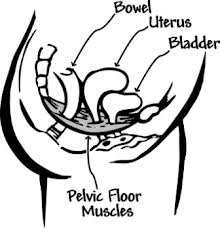
There’s also the sling muscles – the pelvic floor muscles. Never mind their names. And guys, listen up! You have them too and ALL OF US want control of imagesthese muscles, right? So you have to work them – use them or lose them – pretty simple concept. Well, again, working the chair with one leg while balancing on the other forces you to keep the trunk stable, the focus closer to your center of gravity,  and thus use those really deep muscles with funny names.

Give this a try if you’re into keeping your workout working for you. And remember my #1 rule of staying with any fitness routine and why all those dancers don’t leave studios that clearly aren’t teaching them anything – find a work out buddy. Really, it works!

Girls Just Wanna, Just Wanna Have Fun!!!

For my July weddings, I restored one of my mom’s hats- it was a great creative challenge, complete with one of her broaches. My girlfriend Jennifer, middle, mother of the groom is in the middle. We often underestimate a these simple pleasures however it’s so good for the soul!IMG_2420